

Introduction
Artificial intelligence is rapidly changing how industries work, and one of the most powerful innovations in this space is domain-specific language models. These models are designed to understand and generate text within a particular field such as healthcare, finance, law, or technology. Unlike general-purpose AI systems, they focus deeply on one area, making them more accurate and reliable in specialized tasks.
In today’s digital world, businesses need precision and efficiency. General AI models often provide broad answers, but they may lack the depth required for professional use cases. This is where domain-specific language models become extremely valuable. They are trained or fine-tuned on industry-specific data, allowing them to understand terminology, context, and nuances that general models may miss.
As industries continue to adopt artificial intelligence, the demand for specialized solutions is growing. Organizations want tools that can improve decision-making, reduce errors, and save time. Domain-specific language models fulfill this need by delivering focused intelligence tailored to real-world applications.
In this article, we will explore what domain-specific language models are, why they matter, how they are built, their advantages, disadvantages, and practical tips for using them effectively in modern industries.
What is Domain-Specific Language Models?
Domain-specific language models are artificial intelligence systems trained to understand and generate language within a specific industry or subject area. Instead of being trained on general internet data only, they are fine-tuned using specialized datasets related to a particular domain.
For example, a healthcare-focused model is trained on medical reports, journals, and clinical notes. Similarly, a legal model learns from contracts, case studies, and legal documents. This focused training allows to deliver more accurate and context-aware responses.
These models work by using advanced natural language processing techniques. They learn patterns, vocabulary, and relationships within the targeted field. As a result, they can assist professionals in tasks like document analysis, report generation, and decision support.
In simple terms, act like experts in a single subject rather than generalists. This specialization makes them highly valuable for industries where accuracy and precision are critical.
Why is Domain-Specific Language Models Important?
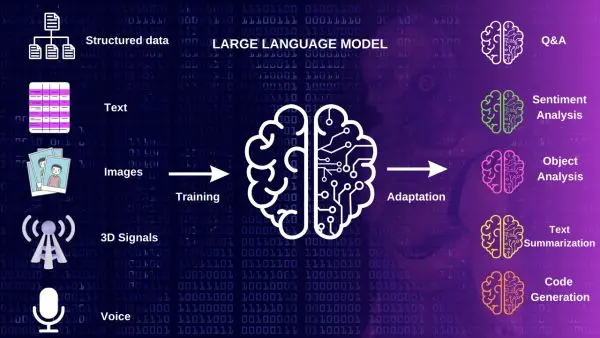
The importance of domain-specific language models lies in their ability to solve real-world industry problems with high accuracy. General AI models often struggle with technical jargon or complex subject matter, but specialized models overcome this limitation.
One key reason they are important is improved accuracy. Since they are trained on domain-relevant data, they produce more reliable outputs. This reduces the risk of errors in critical fields like healthcare and finance.
Another reason is efficiency. Professionals can save time by using these models to automate repetitive tasks such as document summarization, data extraction, and report writing. This allows experts to focus on higher-level decision-making.
Additionally, domain-specific language models enhance productivity by providing context-aware insights. They understand industry-specific terminology, making communication between humans and machines more natural and effective.
Finally, they support innovation. Businesses can build advanced applications such as intelligent assistants, automated research tools, and customer support systems tailored to their industry.
Detailed Step-by-Step Guide
1 Data Collection
The first step in building domain-specific language models is collecting relevant data. This includes industry documents, research papers, manuals, and real-world examples. The quality of data directly impacts model performance.
2 Data Cleaning and Preparation
Once data is collected, it must be cleaned. This involves removing irrelevant information, duplicates, and errors. Proper formatting ensures that the model learns from high-quality inputs.
3 Model Selection
Next, developers choose a base model. This is usually a pre-trained language model that already understands general language structure. It serves as the foundation for specialization.
4 Fine-Tuning Process
In this step, the model is trained further using domain-specific data. This is where start to develop specialized knowledge. Fine-tuning adjusts the model’s weights to align with industry terminology and context.
5 Evaluation and Testing
After training, the model is tested for accuracy and performance. Developers check whether it provides correct and relevant answers within the domain.
6 Deployment
Once validated, the model is deployed into real-world applications such as chatbots, analytics tools, or enterprise systems.
Benefits of Domain-Specific Language Models
- Higher accuracy in specialized tasks
- Better understanding of industry terminology
- Improved efficiency in workflows
- Reduced human workload in repetitive tasks
- Enhanced decision-making support
- Strong performance in technical fields
- Increased automation opportunities
Disadvantages / Risks
- Requires large amounts of high-quality data
- Expensive to develop and maintain
- Limited flexibility outside the target domain
- Risk of bias if training data is incomplete
- Needs continuous updates to stay relevant
- Complex technical setup and infrastructure requirements
Common Mistakes to Avoid
One common mistake is using poor-quality data. If the training data is inaccurate, the model will produce unreliable results. Another mistake is overfitting the model, where it becomes too specialized and loses general understanding.
Many developers also fail to update models regularly. Industries evolve quickly, and outdated information can reduce performance. Additionally, ignoring ethical considerations can lead to biased or unfair outcomes.
Proper planning, data validation, and continuous improvement are essential to avoid these issues when working with domain-specific language models.
FAQs
What are domain-specific language models used for?
They are used to solve industry-specific tasks such as document analysis, automation, customer support, and research assistance.
How are different from general AI models?
General models handle broad topics, while domain-specific language models focus on one industry for higher accuracy.
Are these models expensive to build?
Yes, they can be costly due to data collection, training, and infrastructure requirements.
Which industries use domain-specific language models?
Healthcare, finance, law, education, and technology are major industries using them.
Do they require constant updates?
Yes, regular updates are necessary to maintain accuracy and relevance.
Can small businesses use them?
Yes, but they may prefer pre-trained or lightly fine-tuned versions due to cost constraints.
Expert Tips & Bonus Points
Experts recommend starting with high-quality data before building domain-specific language models. The better the data, the better the performance.
It is also important to define a clear use case. Trying to solve too many problems at once can reduce efficiency. Instead, focus on one specific application.
Another tip is to use continuous evaluation. Regular testing helps identify weaknesses early and improve model performance over time.
Finally, combining domain expertise with machine learning knowledge leads to the best results. Collaboration between industry experts and AI engineers is key.
Conclusion
Domain-specific language models represent a major advancement in artificial intelligence. They bring precision, efficiency, and industry-focused intelligence to modern digital systems. Unlike general-purpose models, they are designed to understand the unique language and needs of specific fields, making them highly valuable for professional applications.
As businesses continue to adopt AI technologies, these specialized models will play a crucial role in transforming workflows and decision-making processes. From healthcare to finance, their impact is already visible and continues to grow rapidly.
However, building and maintaining them requires effort, resources, and continuous improvement. Challenges such as data quality, cost, and maintenance must be carefully managed to achieve success.
In the future, domain-specific language models will become even more advanced, enabling smarter automation and deeper insights across industries. Organizations that invest in them today will gain a strong competitive advantage tomorrow.
